Module 7 · What We Offer
The Menu
Everything PALOMA offers, how one service differs from another, and how far your knowledge goes.
About 40 min to read · then Check yourself
Chapter one
Four ways in
You already know what PALOMA is: a wellness house for the whole human, where bodywork, sound and energy, results-driven beauty and self-discovery live under one roof. This module is about what is actually in the house — the things a guest can book, hold, sit in and take home — and how to find your way around them without memorizing a single price.
Start with the four pillars from Brand Overview. They were how we listen to a guest. Here they do a second job: everything PALOMA offers sits under one of them. Once you can see which, the whole menu stops being a list and starts being a map.
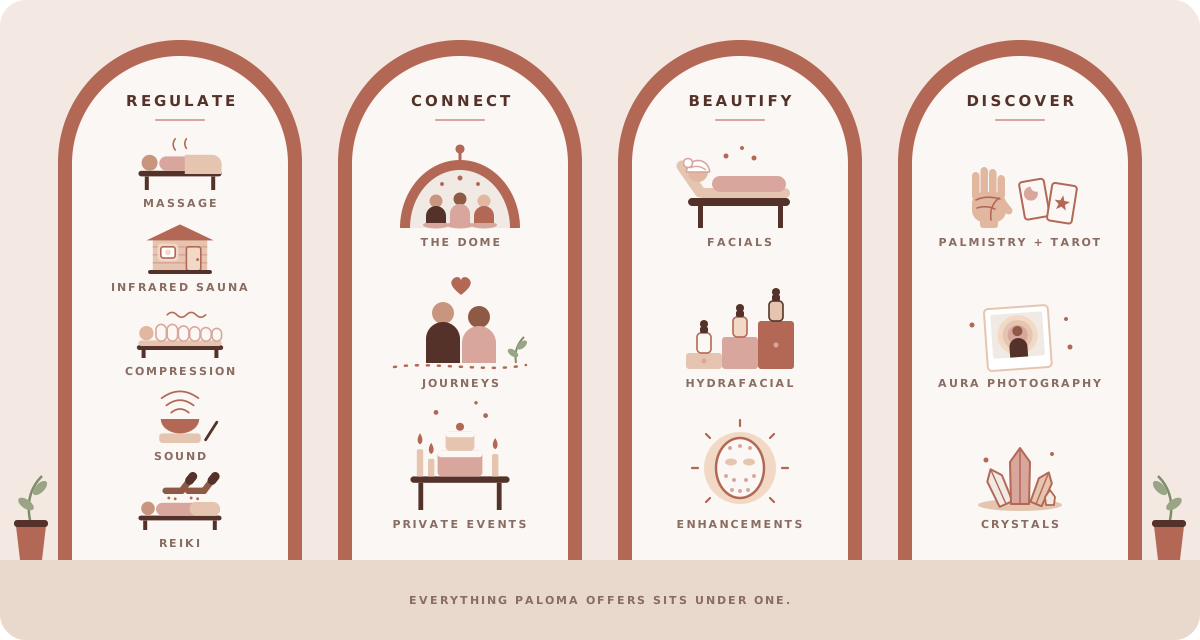
Tap a pillar to see what lives under it.
Settling the nervous system. Almost everyone's first door, whether or not they say so.
- Massage + bodywork
- The table, and where most guests begin. From The Paloma, our signature, to deep and focused work.
- Infrared sauna
- Heat you sit in. A private cabin with six named programs.
- Compression
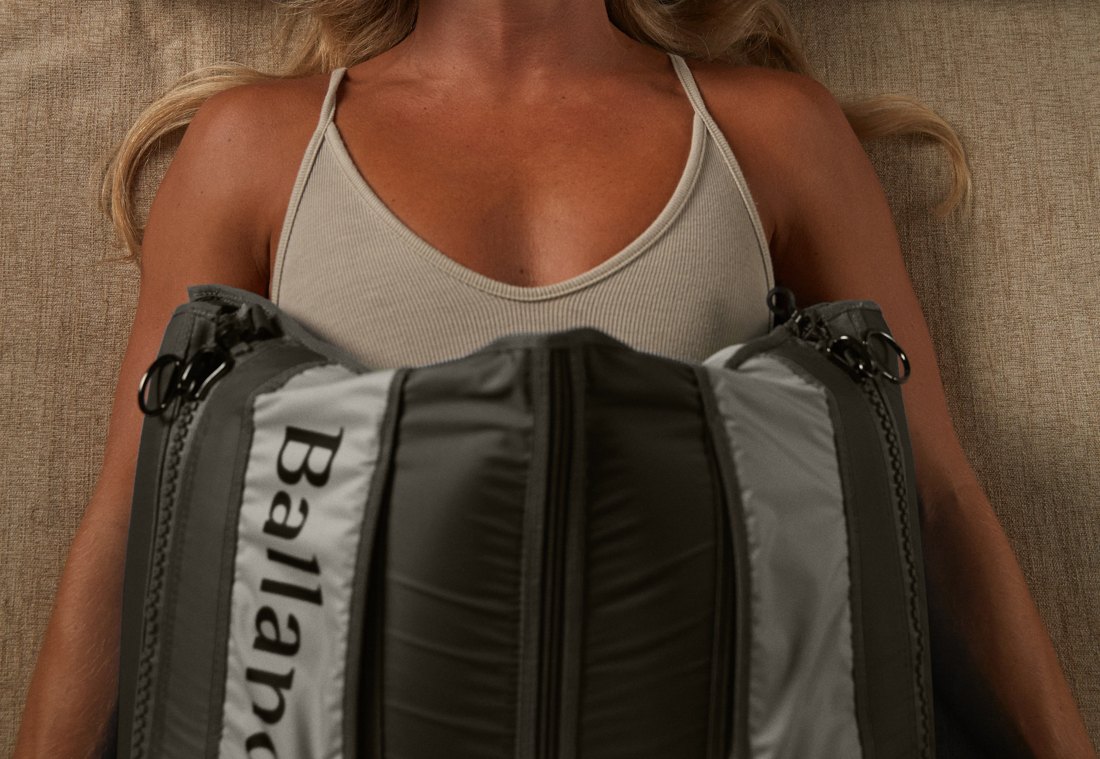
- The Ballancer Pro: a garment that inflates and releases in a rhythm. Nobody touches her.
- Sound
- Crystal singing bowls, one to one or as a ceremony in the Dome.
- Reiki + energy work
- An hour of energy healing. She stays clothed and still.
Being with other people, or properly with yourself.
- The Dome
- Ceremonies and classes in the vaulted room. The Dome is mostly this pillar.
- Journeys
- Two experiences made into one visit, hosted start to finish.
- Private Events
- Birthdays, bridal blessings, groups who want the Dome to themselves.
Skin and results, and never separate from how it feels to receive it.
- Facials
- Fifteen of them, from a thirty-minute reset to ninety minutes, with The Paloma built around her skin on the day.
- HydraFacial
- A device-led treatment in its own ladder of three.
- Enhancements
- Small additions to a facial: LED, dermaplaning, a hydrojelly mask.
Learning something about yourself you didn't arrive knowing.
- Readings
- Palmistry, tarot and the intuitive readings, at two depths.
- Aura photography
- A photograph and a reading, also offered for two.
- Crystals
- In the Edit and the Crystal Hallway, and in her hands.
Notice the order. Regulation before transformation. Calm comes first, and clarity and choice follow from a settled nervous system. That is not a slogan about the brand. It is the order the doors are in, which is why almost everyone starts at the first one.
And notice what the pillars are not. They are a map of PALOMA, not a decision tree for a guest. Two things under the same pillar can be completely wrong for the same person on the same day. What the map gives you is a way to describe something new in a sentence she already understands.
A guest has booked bodywork. She has never heard of a sound bath.
How do the four doors actually help you here?
They tell you what a new thing is for, so you can describe it in one sentence she already understands.
Yes.
She already knows what she came for. Naming the door a new thing sits behind is the fastest honest description you can give — it's the same idea as what you booked, arrived at from a different direction.
That is a real explanation and it contains no claim about what anything does to her.
The other answers, and why not
They tell you what to suggest next — she's in Regulate, so offer her something else in Regulate.
Neat, and it makes the pillars a recommendation engine.
They are a map of PALOMA, not a decision tree for a guest. Two things in the same pillar can be completely wrong for the same person on the same day.
They tell you which pillar PALOMA wants to grow, so you know what to lead with.
No — and if that were ever the reason, a guest would feel it inside a sentence.
The map is for her orientation, not for ours.
There is one more part of the house that belongs to all four pillars at once: The PALOMA Edit, our retail floor. It is not a fifth category, and it is not a shop attached to a spa. It is how something continues after she leaves, and it has a module of its own.
Chapter two
The family tree
Seventy-two things a guest can book. That sounds like a lot to hold, and it would be, if you had to hold it all. You don't. There are three kinds of knowing in this job, and each part of the menu needs a different one.
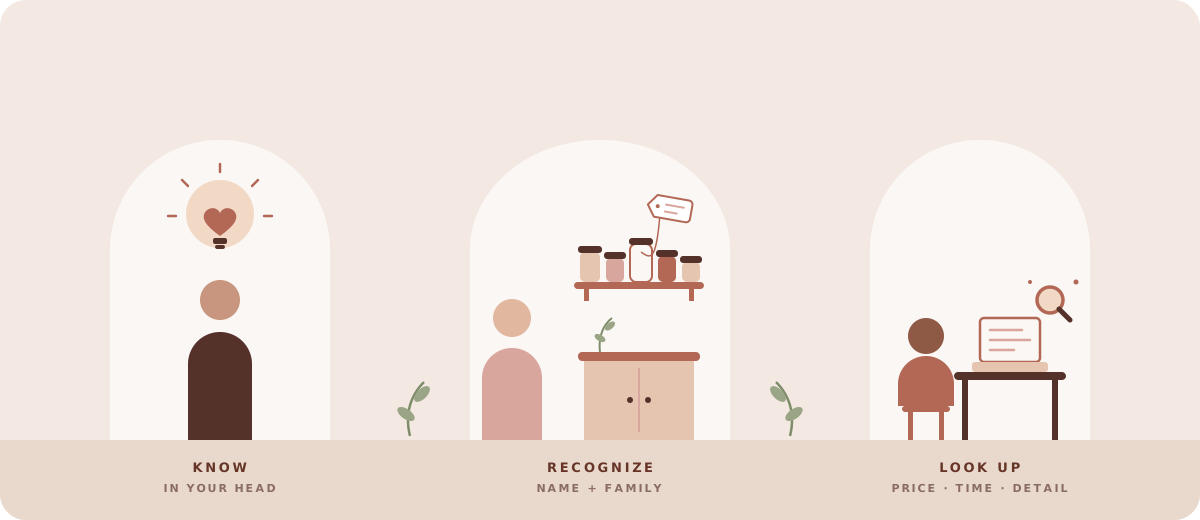
- Know
- In your head. A guest asks, and stopping to look it up would itself be the problem. The families, the few experiences at the front of each, the differences guests actually ask about, and where your part ends.
- Recognize
- You are never surprised by the name, you know which family it belongs to, and you know where the rest lives. About forty names sit here: the fifteen facials, the compression and sauna tiers, the packages, the less common rituals.
- Look up
- Price. Duration. What is actually available on Thursday. Who delivers it. What is in a package. These change, which is exactly why you check them rather than remember them. A confident wrong price is worse than a moment's pause.
So the menu is really eight families, with a few experiences at the front of each. Here they are at a glance, before we walk through them one by one.
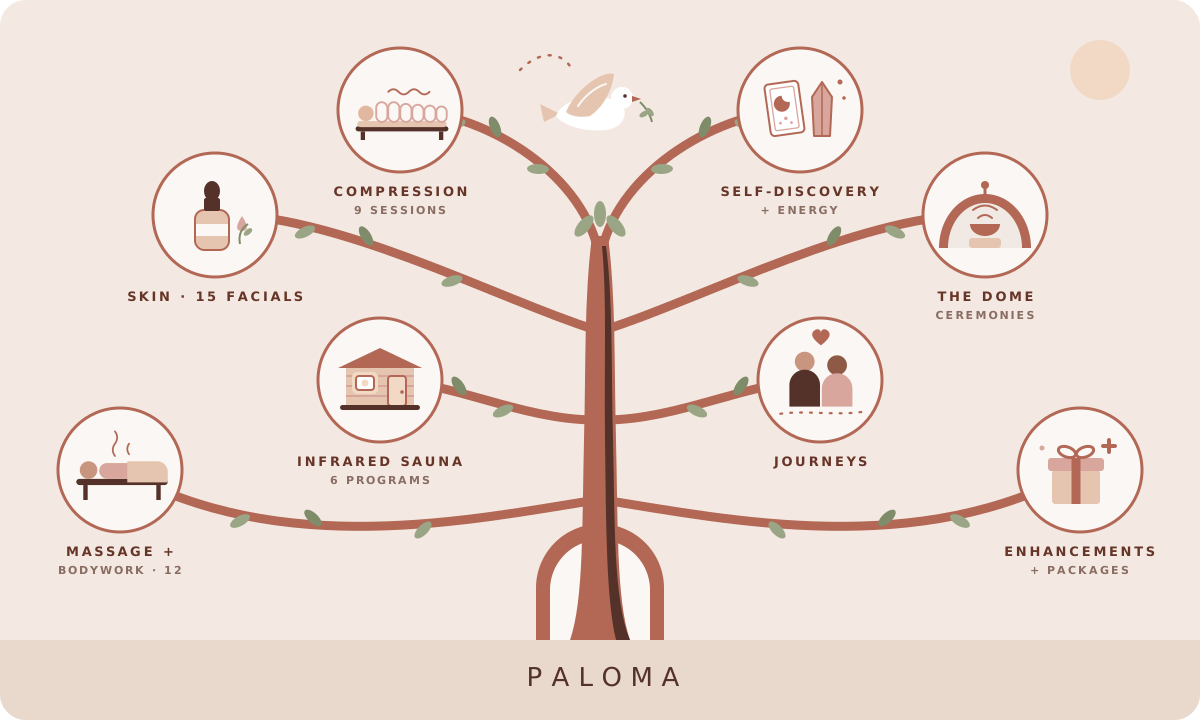
Massage + Bodywork
The table, and where most guests begin. Twelve massages, and four to know by heart. The Paloma is our signature Swedish massage — long, flowing, moderate pressure — and most guests' first experience of PALOMA. If she has no strong preference, this is your default, and saying so plainly is more useful than offering her twelve options. The Power is deep pressure, full body, for someone who wants to be worked on rather than soothed. The Healer is thirty minutes on one area she chooses: head and neck, legs and feet, or shoulders and back. And Clear The Path is slow, specific myofascial release — PALOMA's longest massage, and the only one at two hours.
The rest you recognize: The Himalayan and The Grounding Stone (both warm salt stone; the Grounding Stone adds warm oil), The Higher Realm (CBD, at two pressures), The Mother (pre and post natal, with its own positioning), The Meridian Ritual (cupping), The Monsoon (ninety minutes built around moisture), The Reformer (therapeutic, with stretching) and the UMA Ayurvedic body ritual.
Skin
Results-driven beauty. Fifteen facials, and the one to know first is The Paloma facial, built around her skin on the day rather than around a named protocol. It is the right answer to "I don't really know what my skin needs." Then there is the HydraFacial, a device-led treatment in its own ladder of three. Every other facial is named for what it is for, which gives you a line to walk with her: soothing, moisture, brightening, acne, anti-aging, lymphatic — or customized if none of those is it. That is six questions, not fifteen options.
Compression
The Ballancer suite. She lies in a garment that inflates and releases in a rhythm, and the garment does the work rather than a therapist's hands. Nine sessions under six names, most in two sizes: Core & Lower Body, or Full Body. You will meet it properly in chapter four.
Infrared Sauna
Heat, in six named programs in one private room. The names describe what each one is for; they are not outcomes you can promise. There is also a four-session pack and an unlimited monthly option for anyone using the sauna more than once.
Self-Discovery + Energy
The quieter side of the house. Reiki is an hour of energy healing: a practitioner works with her energy field while she stays clothed and still. Sound Healing is crystal singing bowls, played for her, one to one or as a ceremony in the Dome. And the readings — palmistry, tarot, the intuitive readings and aura photography — come at two depths: an hour for the whole picture, or thirty minutes on one question.
The Dome
Ceremony and class in the vaulted room. The Meditative Sound Ceremony is the best first ceremony for someone nervous: she finds a mat, the room is played, and nothing is asked of her. The moon, equinox and seasonal ceremonies follow the calendar, so you read the current names off the schedule rather than from memory. The Dome has a module of its own, next.
Journeys
Two or more experiences made into one visit, hosted start to finish by one person: Fire Within, Nourish Within, Deep Within, The Foundation, The Revival and The Metamorphosis. Fire Within pairs a ninety-minute Grounding Stone massage with time in the sauna; Nourish Within pairs the Monsoon massage with the Monsoon facial. Each journey has its own arrival beverage, preparation and parting gift, which you look up every time; the full Journey Menu is in Private Events.
Enhancements + Packages
Small additions to something already booked, never booked alone: aromatherapy, a hot towel foot treatment, a CBD treat, dermaplaning, a hydrojelly mask, LED and Crystal Healing Therapy (the crystal blanket a guest may have seen on our website). Each attaches only to certain services, so offer by what she has booked. Packages are containers rather than experiences, and what is in them is always looked up in front of her.
Eight families, a few at the front of each, and everything else looked up. Here is what that looks like when a guest names nothing at all.
“I ran a half marathon on Sunday and my legs are wrecked. I've got about forty minutes.”
She has not named anything. Place her.
The Healer — legs and feet. Thirty minutes on exactly what she is describing.
Yes. Family first, then fit.
Bodywork, one area, short window — and The Healer exists precisely for that shape. You did not need to consider seventy-two services to get here; you needed the family and the front of it.
And notice what you did not do: you did not tell her what it would do for her legs.
The other answers, and why not
Peaceful Warrior compression — it is the muscle recovery one.
The name points that way and the fit does not.
She has forty minutes, and the full-body session is forty on its own before changing. And recovery is in the tier's name rather than in anything you are able to promise her.
It is a reasonable thing to mention. It is not the answer to the window she gave you.
The Power — she wants deep work.
She said her legs are wrecked, not that she wants pressure. Those are different requests and only one of them is hers.
She also gave you forty minutes, and The Power starts at sixty.
Chapter three
How one differs from another
Now that you have seen the families, you are ready for the question you will be asked more than any other: "What's the difference between them all?" The trick is that she is not asking what they are called. She is asking which shelf they are on.
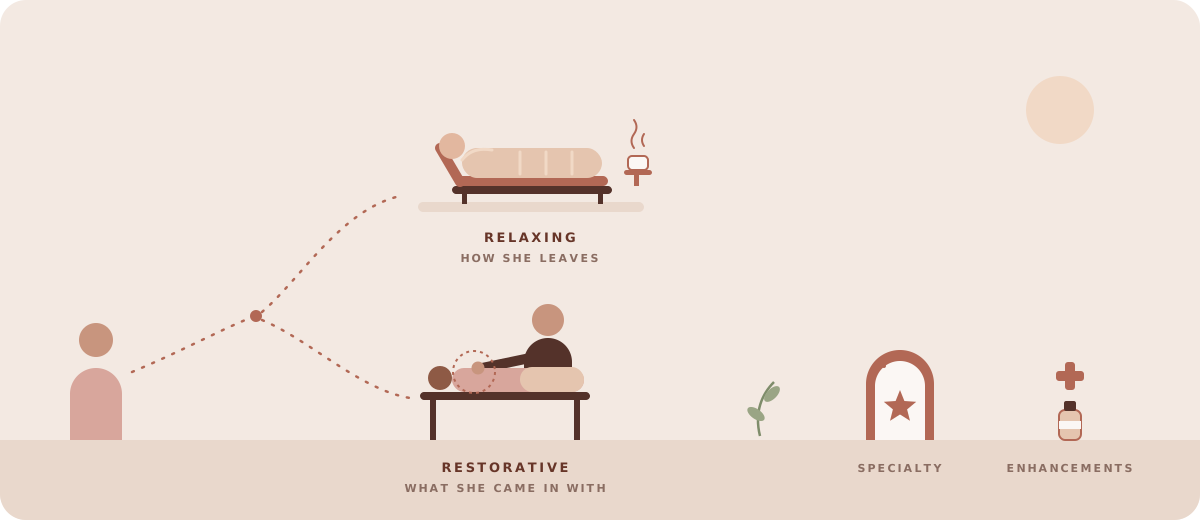
- Relaxing
- Spa-centric. Mood-elevating. The point is how she feels when she leaves, and the work is in service of that.
- Restorative
- Therapeutic. Focused on something specific. The point is the thing she came in about.
- Specialty
- Experiences that sit outside both, for a particular circumstance rather than a particular preference.
- Enhancements
- Not services. Things added to one, which change what an hour feels like without changing which family it is in.
Almost every guest can be placed in one of the first two inside a single sentence. She will not use these words. She will say I just want to switch off or my shoulder is killing me, and those are the two families, said properly.
“What's the difference between them all?”
Two associates who both know the menu.
“So the first one's Swedish-style with light to medium pressure, then there's the salt stone one, the CBD one — there's two of those actually — the hydrating one…”
Accurate, and she stopped listening at actually.
You answered with the list rather than with the difference. She was not asking what they are called. She was asking which shelf they are on.
Look at B.
“They split two ways, really. Some are about switching off and feeling lovely. Some are about a specific thing that hurts. Which end are you at today?”
Yes, and it took eleven seconds.
Two categories, then the question back to her. Once she picks an end, the menu is half the size and you are choosing between three things instead of eleven.
This is the architecture, and it is the most useful thing in this chapter.
Inside a family, the difference is usually what has been added rather than what is done: the warmth, the product, the enhancement. Same shape of hour, different additions — which is why you can describe a service you have never received. It also keeps you honest. Warmed stones are added is a fact. What the warmth does for her is not yours to say.
What happens is yours. Who tends to choose it is yours. What it is good for is a claim.
She asks what a particular experience is good for.
The question has a shape you should notice.
Answer what happens in it, and who tends to choose it — then let her decide what that's good for.
Yes.
What happens is yours. Who tends to choose it is yours. What it is good for is a claim.
And the honest version is usually more useful: it's the one people book when they want to be warm and not think tells her more than a benefit list, and commits PALOMA to nothing it cannot stand behind.
The other answers, and why not
Answer what it's good for — you know the answer, it's on the menu.
The menu says it and that does not make it yours to say.
Several of those lines name medical conditions, and they are inside the claims review for exactly that reason. Good for is an efficacy claim in three friendly words.
Say you can't answer that and offer to ask a therapist.
Over-correcting, and it makes an ordinary question sound clinical.
You had plenty to say. Routing a question you could have answered well trains a guest to think PALOMA's front desk knows nothing.
Chapter four
Heat you sit in, compression by garment
Two families work on a body without a pair of hands, and guests are often curious about both precisely because they are unfamiliar.
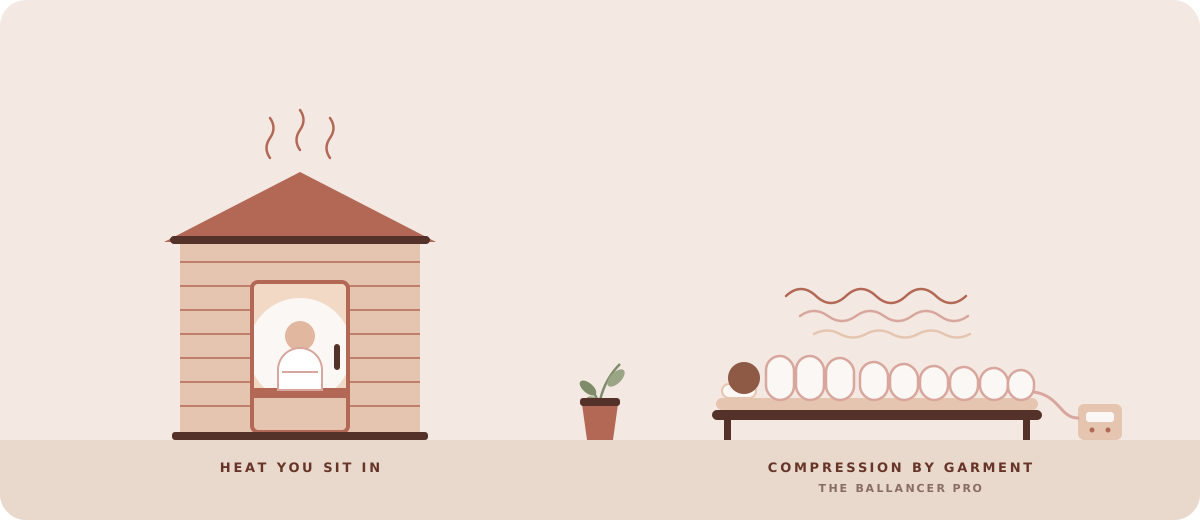
- Heat you sit in
- The infrared sauna. A cabin, to herself, with six named programs rather than six rooms. Infrared heat rather than steam, so it is a dry heat, and it doesn't hit you in the face.
- Compression by garment
- The Ballancer Pro. She lies in a garment that inflates and releases in a rhythm. Nobody touches her, and she stays covered the whole time.
What these two share is the thing to hold: the equipment does the work, in the same rhythm, every time. That is the honest difference from bodywork, and a guest can feel it the moment you say it. A therapist reads a body and changes what she does. A garment does not.
You can say more about this family than you think: the cabin, the dry heat, the garment, the rhythm, being untouched, staying covered, how long she will be in there. None of that is a claim, and all of it is what she actually wanted to know. What you cannot say yet is what any of it does. For heat and for compression alike, that is still being validated at PALOMA, and so is who each one is not for.
“What does the compression actually do for you?”
The most common question in this family. What can you say?
“I can tell you exactly what it's like — you're in a garment that inflates and releases in a rhythm, nobody touches you, and you stay covered the whole time. What it does for you is a better question for your practitioner.”
Yes. Complete, warm, and entirely inside your scope.
Notice how much you were able to give her: the garment, the rhythm, that she is untouched, that she stays dressed. That is a real answer to what is it like, and it is most of what she wanted. The half you handed on is the half that is not yours.
The other answers, and why not
“It's lymphatic work — it helps move fluid and reduce puffiness.”
This is the sentence the whole chapter is here to stop.
Both halves are claims about her body, and what compression does at PALOMA is still being validated. The tier names describe what each one is for; they are what we call them, not results you can promise.
“Honestly, people love it — you'd have to try it and see.”
Safe, and it gives her nothing.
You avoided the claim by avoiding the answer. There was a great deal you could have described — the garment, the rhythm, being untouched, staying covered — and she has been left with a shrug.
Which program, how long and how much are all on the screen. Read them; do not remember them. In this family especially, the sizes are not laid out the way you would expect, so the bigger option is not automatically the longer one. And when a guest's question is about her own body, the answer is never yours to give.
“I had surgery a few months ago — is the compression all right for me?”
Where does this one go?
“That's exactly the kind of thing I want to get right rather than approximate — let me get you a proper answer.”
Yes, and there is no version of this that is yours.
Who compression is and is not for, including after surgery, is being written down at PALOMA and is not settled. So this is not a question you are answering badly if you decline it — there is no approved answer to give, and the honest route is the only route.
Stop. Confirm. Escalate.
The other answers, and why not
“I'd check with your surgeon, but people usually find it's fine.”
The first half is right and the second half undoes it.
You routed the question and then answered it anyway. People usually find it's fine is a clinical reassurance, and it is the part she will remember.
“It's very gentle — nobody touches you and you stay covered the whole time.”
True, and it is not what she asked.
She asked whether it is all right for her. Describing how gentle it is in answer to a medical question reads as a yes, whatever you meant by it.
Chapter five
Describe freely, explain carefully
You have probably noticed a thread running through every family: what you can say, and where you stop. It deserves its own chapter, because the better you get at this job, the easier it becomes to step over the line while being helpful.
A guest, curious rather than sceptical, asks how a modality actually works.
Two associates who have both done the reading.
A clear, confident explanation of the mechanism — what happens in the body, and why that produces the effect.
Impressive, and it is the failure this chapter is about.
Nothing here is lazy. She read carefully, remembered accurately, and answered a question that was never hers — and the guest will repeat it to someone as something PALOMA said.
Look at B.
“I can tell you exactly what happens in the session and what people usually notice. The how-it-works part I'd rather you got from the person who does it — want me to ask her?”
Yes, and notice she gave more than she withheld.
What happens, and what people notice — both hers, both substantial. The mechanism goes to the person whose training covers it.
This is not a smaller answer. It is a more reliable one, and the offer at the end turns a boundary into an introduction.
PALOMA uses five kinds of statement, and never confuses them.
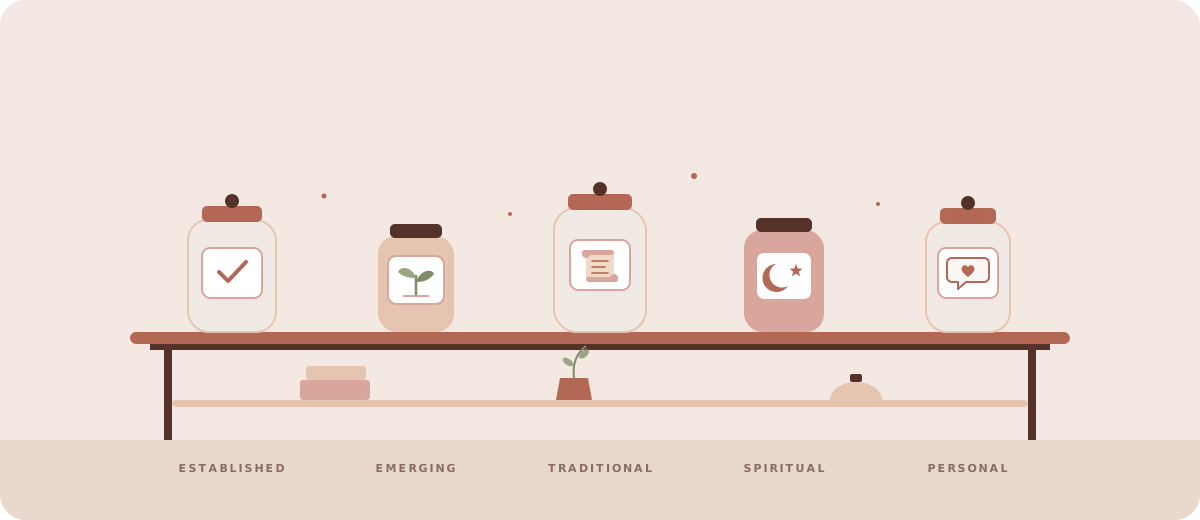
- Established
- Well-supported. Says so plainly, and only where it is true.
- Emerging
- Being studied. Interesting, and not settled.
- Traditional
- Long used, in a named tradition. Honest about being a tradition.
- Spiritual or energetic
- Held as meaning rather than as measurement. Welcome here, and never dressed up as science.
- Personal
- What someone experienced. True about them, and about nobody else.
PALOMA does not become scientifically sterile. The point is not to strip the mystery. It is to know which kind of sentence you are in. And the line itself is unusually easy to see once you know to look: what happens in the room is yours. What happens in a body is not.
Four sentences about the same experience. Every one of them is true.
Which one is a practitioner's to say, not yours?
“It works by shifting your nervous system into a different state — that's the mechanism.”
Yes.
The moment a sentence explains WHY, it has become a claim about a body — and it needs both a validator and a role that covers it.
The giveaway is small: it works by and the mechanism. Everything before this option describes; this one explains. Describing is yours.
The other answers, and why not
“You'll be lying down, fully clothed, and it runs about an hour.”
Yours. What happens is observable and it is the thing she most wants to know.
“Most people go somewhere quite far away in the first ten minutes. A few fall asleep.”
Yours, and it is the best sentence on the page. Personal and experiential, offered as exactly that — what people notice, not what it does.
“It's been used in that tradition for a very long time.”
Yours — provided you say it exactly like that. A tradition named as a tradition is an honest sentence, and it stops being one the moment it becomes and that's because…
Watch for three little phrases: because, works by, and that's why. All three sound helpful, and all three step over the line.
Crystals have their own place: their forms and traditions in Wellness Education, and how a guest meets one and takes it home in Retail.
Guide the experience. Do not interpret the body.
Key takeaways
- 1Regulate · Connect · Beautify · Discover. Four doors, and everything we offer sits under one of them.
- 2The Dome and the Crystal Hallway belong to PALOMA and nowhere else. They are the two you will never find elsewhere.
- 3A map lets you place an unfamiliar question. Placing it is most of what confidence is.
- 1Seventy-two things a guest can book. Eleven you actually hold in your head.
- 2Fluency was never memorisation — it is knowing the shape of the house well enough to place anything in it.
- 3The families still filling in will fill in. The way you use them will not change.
- 1Relaxing is about how she leaves. Restorative is about what she came in with.
- 2Inside a family, the difference is usually what has been added — which is why you can describe something you have never had.
- 3What happens is yours. Who tends to choose it is yours. What it is good for is a claim.
- 1You can say more about this family than you think — the cabin, the dry heat, the garment, the rhythm, being untouched and staying covered.
- 2What you cannot say yet is what any of it does. For heat and compression alike, that is still being validated.
- 3Which room, which programme, how long and how much are all on the screen. Read them; do not remember them.
- 1Describe freely. Explain carefully. The room is yours; the body is not.
- 2Guide the experience. Do not interpret the body.
- 3Watch for because, works by, and that's why. All three sound helpful, and all three step over the line.